What Is Smart Lighting for Modern Buildings?
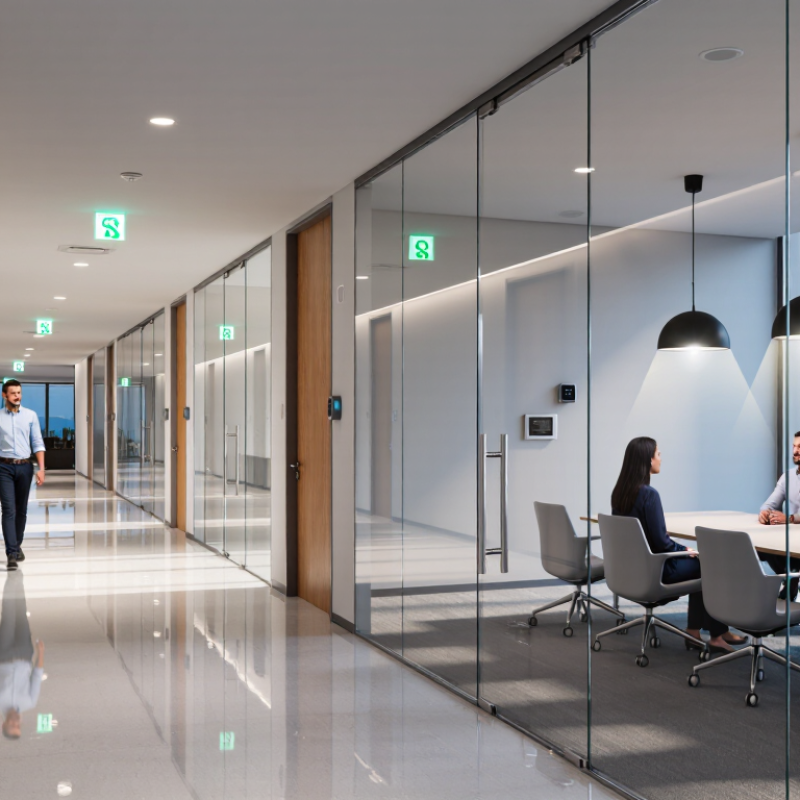
Smart lighting is changing how modern buildings respond to people, daylight, and daily operations. It combines efficient LEDs, sensors, wireless controls, and software into one responsive environment. A corridor can brighten when someone enters. A conference room can soften its light during a presentation. Near windows, fixtures may dim as sunlight moves across the floor.
Dr. Mariana Figueiro, a leading lighting researcher and former director of the Lighting Research Center, has said, “Light is the most powerful drug we have.” Her statement highlights a central truth: lighting affects more than visibility. It can influence alertness, comfort, sleep patterns, safety, and workplace performance. This makes Lighting Innovations For Modern Buildings a practical design priority, not a decorative trend.
Yet smart lighting is not automatically intelligent. Poor sensor placement can create dark corners or unwanted switching. Overly complex controls may frustrate occupants. Energy savings can also disappoint when systems are badly commissioned or ignored by facility teams. These weaknesses deserve attention.
Good design begins with the building’s actual users. Engineers should study room functions, daylight levels, maintenance routines, and accessibility needs. They should also protect privacy when occupancy data is collected. Reliable systems need clear controls, secure networks, and measurable performance targets. The best solution may be less dramatic than expected. Sometimes, quiet consistency matters most.
This article examines the technologies, benefits, limitations, and design decisions shaping smart lighting in contemporary buildings. It also asks a difficult question: does a smarter system always create a better experience?
What Is Smart Lighting for Modern Buildings?
Smart lighting is an integrated system that adjusts illumination according to people, daylight, schedules, and room use. It combines efficient fixtures, sensors, communication networks, and software controls. Unlike a simple timer, it can respond to changing conditions within seconds. A vacant corridor may dim, while a meeting room brightens for presentations.
Its core principle is responsiveness with human control. Occupancy sensors detect movement, and daylight sensors measure available sunlight near windows. The system then adjusts output to meet a defined lighting target. Designers should document these targets using task needs, safety requirements, and measured illuminance. Manual switches remain important. Automation can misread an empty room or dim lights during a quiet discussion. People need an easy override.
Reliable smart lighting also depends on good commissioning. An installer must test sensor coverage, delay settings, glare, and emergency operation. Small errors matter. A poorly placed sensor may leave a desk dark beside a bright window. Data should support maintenance, not create unnecessary surveillance. System access requires secure permissions, regular updates, and clear responsibility. Open communication protocols can improve interoperability, but compatibility is never guaranteed. Careful testing remains necessary.
Energy savings are valuable, but comfort and accessibility deserve equal attention. I have seen efficient spaces feel unpleasant when color temperature changes too sharply. That weakness deserves honest review. Smart lighting works best when technical performance, occupant feedback, and long-term maintenance guide every decision.
| Core Principle | Definition | How It Works in Modern Buildings | Typical Technologies or Functions | Measurable Indicators | Primary Benefits |
|---|---|---|---|---|---|
| Sensing and Awareness | Lighting responds to information about occupancy, daylight, time, temperature, or other relevant conditions. | Sensor data is used to determine whether a space is occupied, how much natural light is available, and whether lighting output should be adjusted. | Occupancy sensors Daylight sensors Ambient-light sensors Door and room-status inputs | Occupancy detection accuracy, sensor coverage, daylight availability, false activation rate | Reduced unnecessary operation, improved comfort, and better visibility of space usage |
| Adaptive Control | Light output, switching, and operating schedules are automatically adjusted according to current conditions or predefined rules. | Fixtures can dim, switch, or change scenes instead of operating at one fixed level throughout the day. | Dimming Time scheduling Scene control Vacancy control | Operating hours, dimming level, switch-off delay, lighting energy use in kWh | Energy efficiency, flexible space operation, and improved user control |
| Daylight Integration | Electric lighting is coordinated with available daylight to maintain suitable illumination while avoiding excessive energy use and glare. | Near-window luminaires can dim when daylight contributes sufficient illumination, while interior zones maintain the required light level. | Daylight harvesting Daylight zoning Automatic dimming Glare-aware controls | Electric-light contribution, illuminance uniformity, glare observations, daylight-linked energy savings | Lower electricity demand, better connection to the outdoor environment, and more stable visual conditions |
| Connectivity and Communication | Lighting devices exchange information with one another and may communicate with building-management or facility systems. | Controllers, sensors, luminaires, gateways, and software share status and control information through wired or wireless networks. | Wired control networks Wireless mesh networks Gateways Building-management integration | Network availability, command response time, device reporting rate, integration coverage | Centralized visibility, scalable control, easier coordination, and more efficient facility operations |
| Interoperability | Different lighting components and building systems can exchange information using documented protocols or interfaces. | Lighting controls can share relevant data with systems such as building automation, room booking, security, and energy monitoring platforms. | Open protocols Application programming interfaces Data gateways Standardized device profiles | Number of integrated systems, supported data points, protocol compatibility, vendor-neutrality | Reduced dependency on isolated systems, easier expansion, and longer-term maintainability |
| Human-Centred Lighting | Lighting is designed around visual performance, comfort, accessibility, and the activities taking place in each space. | Users can adjust scenes or local settings within defined limits, while automatic controls maintain appropriate conditions for work, circulation, meetings, or relaxation. | Task-based scenes Personal controls Low-glare optics Accessible interfaces | Illuminance, uniformity, glare, user satisfaction, complaint frequency, control usability | Improved visual comfort, productivity support, accessibility, and occupant acceptance |
| Energy and Carbon Management | Lighting operation is monitored and optimized to reduce electricity consumption and associated emissions without compromising required performance. | Control strategies, schedules, zoning, and energy dashboards are used to identify waste and improve operating efficiency. | Energy metering Load monitoring Automated schedules Performance dashboards | Lighting energy use in kWh, energy-use intensity, peak demand, operating hours, carbon emissions | Lower operating costs, reduced emissions, and evidence-based energy management |
| Data, Analytics, and Diagnostics | Operational data is collected and analyzed to evaluate performance, detect faults, and support maintenance decisions. | System records can reveal abnormal energy use, failed devices, communication problems, or areas with unusual occupancy patterns. | Fault alerts Usage analytics Remote status reports Maintenance dashboards | Fault-detection rate, mean time to repair, unplanned outage duration, data completeness | Faster maintenance, improved reliability, reduced manual inspections, and better asset planning |
| Safety, Security, and Privacy | Smart lighting must support safe illumination, protect system access, and handle collected data responsibly. | Emergency-lighting requirements remain separate and essential, while connected controls use access management, secure configurations, and appropriate data policies. | Emergency-lighting coordination User permissions Secure networks Data minimization | Emergency-lighting test results, access-control events, cybersecurity updates, retained data volume | Operational resilience, occupant safety, reduced cyber risk, and improved privacy protection |
| Scalability and Maintainability | The lighting system can be expanded, reconfigured, repaired, and upgraded throughout the building’s service life. | Modular devices, documented settings, accessible components, and standardized commissioning procedures simplify future changes. | Modular architecture Remote configuration Asset registers Lifecycle documentation | Expansion capacity, spare-part availability, configuration time, maintenance cost, system service life | Lower lifecycle costs, reduced disruption, and greater adaptability to changing building needs |
| Commissioning and Continuous Improvement | Smart lighting is tested, verified, and periodically adjusted to ensure that installed functions deliver the intended results. | Commissioning confirms sensor placement, control sequences, light levels, user interfaces, network communication, and energy reporting after installation. | Functional testing Control-sequence verification Occupant feedback Periodic review | Test completion rate, control overrides, energy-performance trend, occupant feedback, unresolved faults | Reliable operation, better performance over time, and reduced risk of control-system underuse |
It combines adjustable fixtures, sensors, controllers, and software. Together, they manage brightness, timing, and sometimes color temperature.
They detect movement near desks, corridors, and meeting rooms. Lights may brighten when someone enters and dim after the area becomes empty.
They measure natural brightness near windows. The system can reduce artificial light when sunlight is strong.
Technicians adjust detection ranges, response delays, and minimum brightness levels. Furniture can change sensor performance.
Yes. Quiet movements may go unnoticed. Lights might switch off while someone reads or works at a desk.
Yes. Clear wall controls give occupants confidence and provide a useful backup. Automation is not magic.
Test one occupied area during morning, afternoon, and evening conditions. Check light levels, delays, comfort, safety, and accessibility.
Teams should review energy data, restrict system access, and maintain software regularly. A system that cannot be maintained is not truly smart.
Dashboards may miss daily frustrations. A short delay can annoy someone carrying documents, even when the system appears efficient.
Start with one occupied area and improve gradually. Some settings will be wrong at first. That is worth noticing.
Smart lighting for modern buildings is an intelligent approach to illumination that combines energy efficiency, automation, and user comfort. Unlike conventional lighting systems, it uses sensors, connected controls, programmable schedules, and responsive software to adjust brightness, color, and operation according to occupancy, daylight, time, and specific activities. These Lighting Innovations For Modern Buildings create a more adaptive environment while supporting responsible energy management.
Smart lighting operates through networks that connect fixtures, sensors, control panels, and building management systems. It can serve offices, homes, schools, healthcare facilities, retail spaces, and public areas by improving visibility, atmosphere, safety, and operational efficiency. Major benefits include reduced energy consumption, lower maintenance needs, enhanced comfort, and better data for facility management. However, implementation may involve higher initial costs, system complexity, privacy considerations, and the need for reliable infrastructure. Future development is expected to focus on greater interoperability, automation, human-centered design, and stronger integration with sustainable building technologies.

 Boray Light