In 2026, good indoor lighting is about more than choosing a brighter bulb. It means matching light to the room, the task, and the people using it. A kitchen counter needs clear, even illumination; a bedroom benefits from softer light in the evening. Small details matter. Glare on a laptop screen, a dark hallway corner, or a bare bulb above a dining table can make a space feel uncomfortable, even when the room seems bright.
How To Improve Indoor Lighting Quality starts with observing how a room is used throughout the day. Check where daylight falls, where shadows collect, and whether light feels harsh or dull. Then consider layered lighting: ambient light for general visibility, task lighting for reading or cooking, and accent lighting for visual depth. Color temperature and color rendering also affect how a room feels and how accurately colors appear. A phone light-meter app can offer a rough comparison, but it is not a substitute for calibrated equipment. Be cautious with exact readings.
There is no single setup that suits every home. A warm lamp may feel relaxing in one room and dim in another. Test changes at different times, and notice whether they reduce eye strain without creating glare. Even thoughtful plans can miss something. That is worth admitting. The practical approach is to adjust one fixture or bulb at a time, then reassess comfort, visibility, and energy use before making further changes.
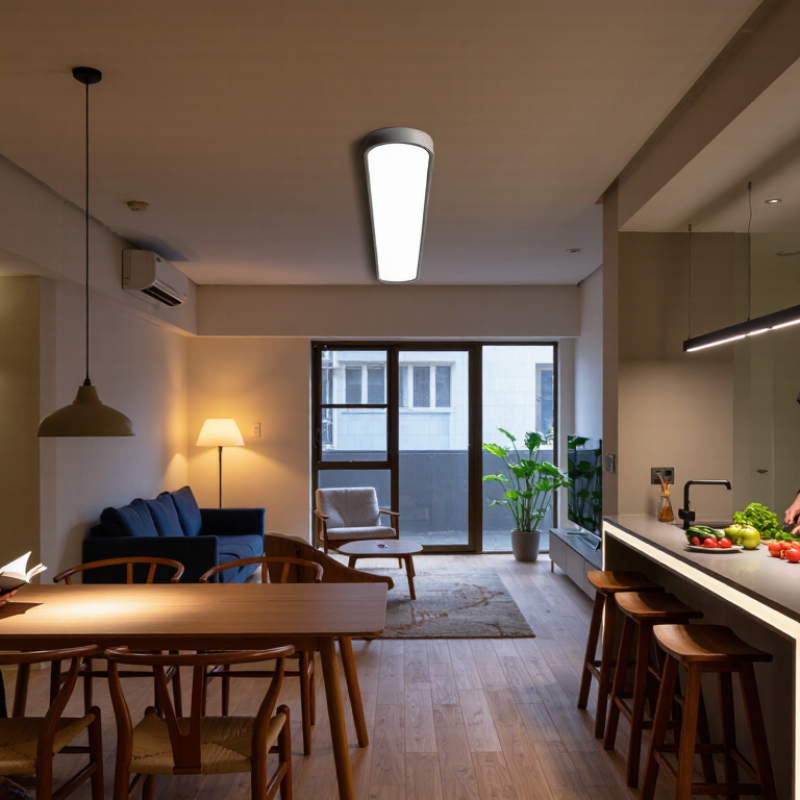
Assess Room Needs and Existing Lighting Conditions
Before changing fixtures, identify what each room needs. A kitchen counter needs clear task light, while a bedroom may benefit from softer, lower-level lighting. Note where people read, cook, work, or move after dark. Look closely. Observe the room in the morning, afternoon, and evening, since daylight shifts with window direction, weather, and season.
Then map existing light sources, including ceiling fixtures, table lamps, and light entering through windows. Check for dim corners, harsh reflections on screens, and shadows across work surfaces. A simple light meter can help compare areas, but phone readings are only rough estimates. Record the bulb’s brightness in lumens and its color temperature, if available. Also note wall colors and finishes: dark paint and matte surfaces reflect less light than pale, glossy ones. A common mistake is judging brightness from the center of a room alone. Stand where tasks happen, and check whether the light reaches the surface without shining directly into your eyes. Even a careful first assessment can miss a troublesome shadow; revisit the room during an ordinary evening routine.
Understand Brightness, Color Temperature, and Color Accuracy
Indoor lighting quality begins with useful brightness, not the highest lumen number on a package. Lumens describe total light output, while lux describes light reaching a surface. A desk may need brighter, more focused light than a hallway. Check the actual work area at night, when daylight is not masking weak spots. A basic light meter can help, though phone readings are only approximate. Look for glare on screens and hard shadows beside notebooks. More light is not always better.
Color temperature, measured in kelvins, changes how a room feels. Warm light around 2700–3000 K often suits bedrooms and relaxed evenings. Neutral light near 3500–4000 K can feel clearer in kitchens or study areas. These ranges are starting points, not rules. Wall paint, window size, and finishes all shift the perceived color. I find this easy to overthink; living with a setting for a few evenings can reveal more than comparing numbers alone.
Color accuracy matters when judging clothing, food, artwork, or makeup. The color rendering index, or CRI, offers a rough guide; a rating of 90 or higher is often useful for color-sensitive tasks. Still, one score cannot describe every shade equally well. If available, consult fuller color-rendering data, such as TM-30, and compare familiar objects under the light. A red sweater or ripe tomato can look unexpectedly dull under a source with weak color fidelity. Check it in the room.
Plan Ambient, Task, and Accent Lighting in Layers
Good indoor lighting rarely comes from one bright ceiling fixture.
A layered plan combines ambient, task, and accent light, then adjusts each to the room’s use. Start with
ambient light: ceiling fixtures, wall lights, or indirect uplighting can soften dark corners. Choose a comfortable, even baseline rather than flooding every surface. Dimmer controls help as daylight changes.
Add
task lighting
where eyes and hands need it. A desk lamp should illuminate the work without reflecting in a screen; place it opposite your writing hand when practical. In kitchens, light counters from a position that limits shadows from your body. Reading chairs benefit from a focused lamp near shoulder height.
Test it. Small changes matter.
Accent lighting
gives depth to shelves, artwork, or textured walls. Aim beams carefully, since glare can make a favorite picture hard to enjoy. Keep all three layers independently controllable when possible, and choose similar color temperatures nearby to avoid a patchwork effect. Still, a perfectly matched scheme can feel flat. Live with the setup for a few evenings, notice where shadows or eye strain persist, and revise one layer at a time.
Choose Efficient Fixtures, Controls, and Smart Lighting Features
How to Improve Indoor Lighting Quality in 2026?
Choose efficient fixtures with good color rendering, then match their output to each room. A desk needs clear, focused light; a hallway usually needs less. The U.S. Department of Energy reports that LED lighting uses at least 75% less energy than incandescent lighting. That efficiency matters, but glare and harsh shadows can still make a room uncomfortable. Check light distribution, dimming compatibility, and color quality before choosing fixtures.
Controls can reduce waste without leaving rooms dim. A Lawrence Berkeley National Laboratory meta-analysis reported average lighting-energy savings of 24% with occupancy sensors and 28% with daylight controls. Use occupancy sensors in storage rooms and daylight dimming near windows. Set schedules around actual room use, not an idealized timetable. Small changes matter. Sensors also need careful placement: a unit that misses someone sitting still can switch lights off at the wrong moment.
Smart lighting adds convenient adjustment, not automatic good design. Tunable white settings can shift from cooler task lighting to warmer evening light, while app or wall controls let occupants dim specific zones. Keep manual controls simple and label them clearly. I would not pretend one setting suits every room; it rarely does. Test the setup at a desk, beside a window, and after dark. That part is easy to overlook. Check for flicker, reflections on screens, and abrupt brightness changes, then adjust the control settings.
How to Improve Indoor Lighting Quality in 2026? Choose Efficient Fixtures, Controls, and Smart Lighting Features
Annual energy use for common lamps delivering approximately 800 lumens, based on 3 hours of use per day and a 365-day year. Lower energy use can reduce lighting costs while maintaining similar light output.
Typical examples: incandescent 60 W, halogen 43 W, compact fluorescent (CFL) 13 W, and LED 9 W. Actual performance varies by product. For better lighting quality, select suitable color temperature and color rendering, then use dimmers, occupancy sensors, and smart schedules to match light levels to the task and time of day.
Install, Adjust, and Evaluate the Lighting Setup
Improving indoor lighting in 2026 means treating installation, adjustment, and evaluation as one process. Start by mapping where people read, use screens, and move through the room. Install general lighting for even coverage, then add adjustable task lights where precision work happens. Aim fixtures away from glossy desks and screens; a bright reflection can make a technically well-lit space uncomfortable.
For office reading, writing, and computer work, EN 12464-1:2021 specifies 500 lux maintained illuminance, a UGR glare limit of 19, and a minimum colour-rendering index of 80. These are useful benchmarks, not universal targets for every room. Measure light at desk height, during daytime and after dark. A single lux reading is a blunt instrument: it cannot reveal glare, dark corners, or whether the light feels tiring. I would reassess after moving furniture, too—an adjustment that seems minor can change the whole setup.
Tips: Check for flicker, shadows, and screen reflections. Dim or redirect fixtures before adding more light. Record readings and comfort notes; both matter.
Conclusion
How To Improve Indoor Lighting Quality begins with understanding how each room is used and evaluating its current lighting, including dark corners, glare, and areas that feel uncomfortable. Next, consider brightness, color temperature, and color accuracy so the light suits both the activity and the atmosphere. These factors help create spaces that feel functional and balanced throughout the day.
A well-planned setup combines ambient lighting for general visibility, task lighting for focused activities, and accent lighting to highlight selected features. Choose efficient fixtures and practical controls, with smart features where they genuinely add convenience. After installation, adjust fixture positions and settings, then assess how the room looks and feels during different activities and times of day. Small refinements can improve comfort, visibility, and energy use while helping the lighting work naturally with the room.

 Boray Light