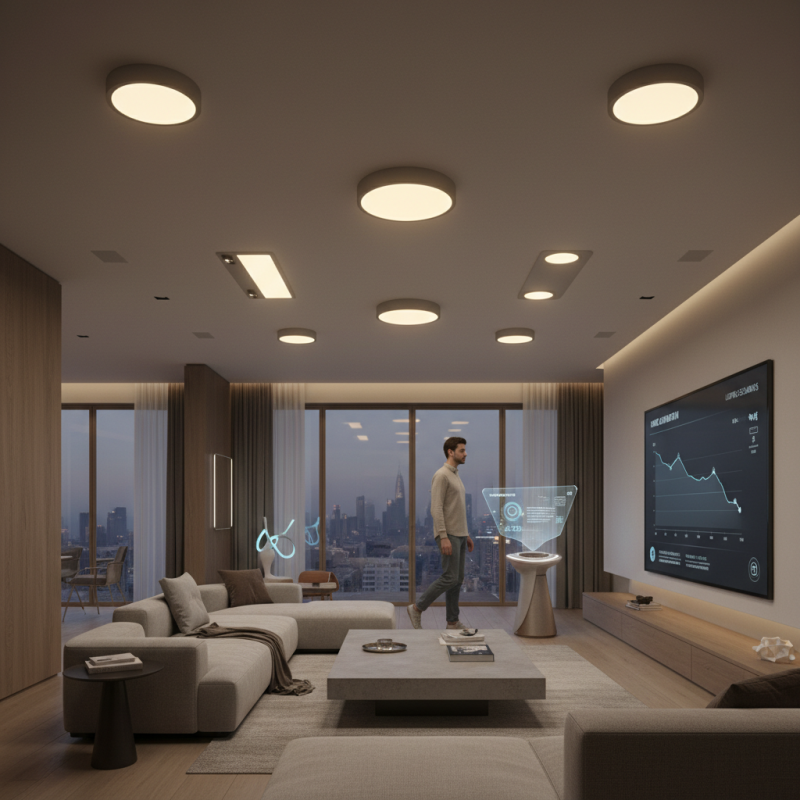
When it comes to home lighting, Motion Sensor Ceiling Lights are a game changer. These lights provide convenience, security, and energy savings. John Smith, an expert in smart home technology, states, “Motion Sensor Ceiling Lights revolutionize how we interact with our spaces.” His insight captures the essence of these innovative lights.
Imagine walking into a dark room and having the lights automatically turn on. This feature enhances safety, especially at night. However, not all motion sensor lights are created equal. Some may have delayed responses or inconsistent performance. It's crucial to choose wisely.
In 2026, the market for Motion Sensor Ceiling Lights has expanded significantly. Homeowners now demand improved technology and design. Yet, many struggle with finding reliable products. Understanding the balance of functionality and aesthetics is key. The right light not only brightens your home but also brings peace of mind.
Overview of Motion Sensor Ceiling Lights
Motion sensor ceiling lights are becoming increasingly popular in modern homes. These lights enhance
convenience and energy efficiency.
According to a 2022 industry report, over 40% of households in the U.S. are now adopting
smart lighting solutions, including motion sensors. Homeowners appreciate how these lights can automatically
turn on when someone enters a room. This feature minimizes energy waste, making homes more sustainable.
The technology behind these lights is fascinating. Most models use passive infrared sensors to detect motion.
The brief delay before the lights turn off can sometimes frustrate users. If you're cooking in the kitchen, the light
may accidentally turn off when you move out of range. This feedback is essential for manufacturers to improve their
products. Companies are developing solutions to ensure consistent performance without unnecessary interruptions.
Installation of motion sensor ceiling lights is generally straightforward. Many models are designed for easy
retrofitting into existing electrical fixtures. A recent survey found
that 70% of homeowners prefer lights that are simple to install without professional help. Yet,
some find the initial setup challenging, especially regarding sensor positioning. Understanding these nuances
can guide future designs and enhance user experience.
Key Features to Consider When Choosing Ceiling Lights
When selecting motion sensor ceiling lights, several key features are essential. First, sensitivity is crucial. A higher sensitivity level ensures that lights activate with minimal movement. Reports indicate that up to 40% of users prefer lights that react to even slight movements, making this feature vital.
Next, the light's coverage area matters. Many models cover a limited range, which can be inadequate for larger rooms. Choices with wider detection zones often result in greater energy savings. These lights can save homeowners up to 30% on electricity bills compared to traditional lighting.
The installation process should also be simple. Some users find complicated setups frustrating. Thus, easy-to-install options are favored. Furthermore, consider the design. Aesthetic appeal can enhance your home’s ambiance. Research shows that 50% of buyers prioritize design alongside functionality. Balancing practicality and style is a common challenge.
Best Motion Sensor Ceiling Lights for Your Home in 2026
| Model |
Brightness (Lumens) |
Detection Range (Feet) |
Color Temperature (Kelvin) |
Battery Backup (Hours) |
Smart Features |
| Model A |
800 |
30 |
3000 |
4 |
No |
| Model B |
1000 |
40 |
4000 |
3 |
Yes |
| Model C |
1200 |
35 |
5000 |
5 |
Yes |
| Model D |
900 |
25 |
3500 |
2 |
No |
Top Brands for Motion Sensor Ceiling Lights in 2026
As we look towards 2026, the demand for motion sensor ceiling lights is on the rise. Reports from the lighting industry indicate a projected growth rate of around 10% annually. This surge highlights the increasing focus on energy efficiency and convenience in home lighting solutions. Homeowners are seeking smart lighting that can adapt to movement. This trend reflects a larger shift toward smart homes and automation.
Several top brands are leading in this growing market. They emphasize eco-friendly designs and advanced technology. A recent study showed that over 70% of consumers prefer products that save energy and reduce electricity bills. These brands are investing heavily in research and development to ensure their products are not only functional but also visually appealing. The integration of LED technology helps in achieving longer lifespans and lower energy consumption.
However, choosing the right motion sensor ceiling light can be challenging. Users often report issues with sensitivity and range. Some lights may not activate as expected, causing frustration. Additionally, certain designs may not blend well with existing décor, making style a consideration. Homeowners should weigh these factors carefully. Balancing aesthetics with functionality is crucial for long-term satisfaction.
Installation and Maintenance Tips for Motion Sensor Lights
Installing motion sensor ceiling lights
can greatly enhance your home's security. Choose areas where you frequently move, like hallways or entryways. Ensure that the lights have a clear view of the space. This minimizes dead zones where motion might not be detected.
Mount the lights around seven to eight feet high for optimal performance.
Maintenance is crucial for long-lasting function.
Dust and debris can accumulate on sensors. Regularly clean them with a soft cloth. If your lights flicker or fail, check the wiring. Sometimes, it’s just a loose connection. Reassess the placement if the sensors don’t respond effectively.
Be aware of the environment. Overhanging branches or objects can obstruct motion detection. Adjust the sensitivity settings based on your surroundings, too. You might need to experiment a bit. Trial and error is part of the process. Making small changes can lead to improved performance. It’s all about finding that perfect balance.
Benefits of Using Motion Sensor Ceiling Lights in Your Home
Motion sensor ceiling lights are a modern convenience for every home. They automatically turn on when someone enters a room. This feature helps save energy. You'll no longer need to worry if you left the lights on. Imagine walking into a dark hallway, only to be welcomed by light as you approach. It's a simple yet effective solution.
Using these lights can enhance safety. They light up spaces when you need them most, reducing the risk of falls. This is especially helpful in stairways or bathrooms. Families with young children or elderly members may find this particularly beneficial. Also, it can deter intruders when lights activate outside your home.
Tips: Consider the installation location carefully. Areas with high movement should have motion sensors. But, be mindful of pets. Sometimes, their movements can trigger unnecessary lighting. Adjust sensitivity settings to avoid this. You might also need to reflect on how often the lights activate. Too frequent activation may become bothersome. Balancing brightness and motion detection is key for comfort.
Conclusion
Motion Sensor Ceiling Lights are becoming an essential addition to modern homes, offering both convenience and enhanced security. This article provides an overview of these innovative lighting solutions, explaining their functionality and the various key features to consider when selecting the ideal model for your space. Important factors include sensitivity settings, design options, and energy efficiency.
Additionally, it highlights top brands renowned for their quality motion sensor ceiling lights in 2026, alongside helpful installation and maintenance tips to ensure longevity and optimal performance. The numerous benefits of using these lights—such as automatic illumination, energy savings, and increased safety—make them a valuable investment for any homeowner looking to enhance their living environment.

 Boray Light