Small homes rarely suffer from a lack of style. They suffer from poorly planned light. A single ceiling fixture can flatten a room, create glare, and leave corners gloomy. This guide explores the Top 10 Best Lighting Ideas for Small Homes, with practical choices for apartments, studios, and compact family rooms. The aim is not to make every surface bright. It is to make each area useful, comfortable, and visually larger.
Lighting designer Randall Whitehead describes lighting as “the jewelry of architecture.” His observation matters in small spaces, where a pendant, wall sconce, or warm LED strip can become both a functional tool and a focal detail. Residential lighting practice shows that layered lighting often works best: ambient light for movement, task light for reading or cooking, and accent light for depth. Measure the room first. Check beam angles, fixture height, and outlet positions before buying anything. Small errors become obvious quickly.
The ideas ahead compare recessed fixtures, track lights, mirrors, under-cabinet LEDs, portable lamps, and dimmers. They also consider color temperature, energy use, maintenance, and rental-friendly installation. A 2700K lamp may soften a bedroom, while 3000K often supports kitchens and work areas. Preferences still vary. A space can look polished yet feel cold. That deserves reflection. Good lighting should support real routines, not only photographs. Use these recommendations as a starting point, then adjust brightness at night, when the room reveals its honest weaknesses.
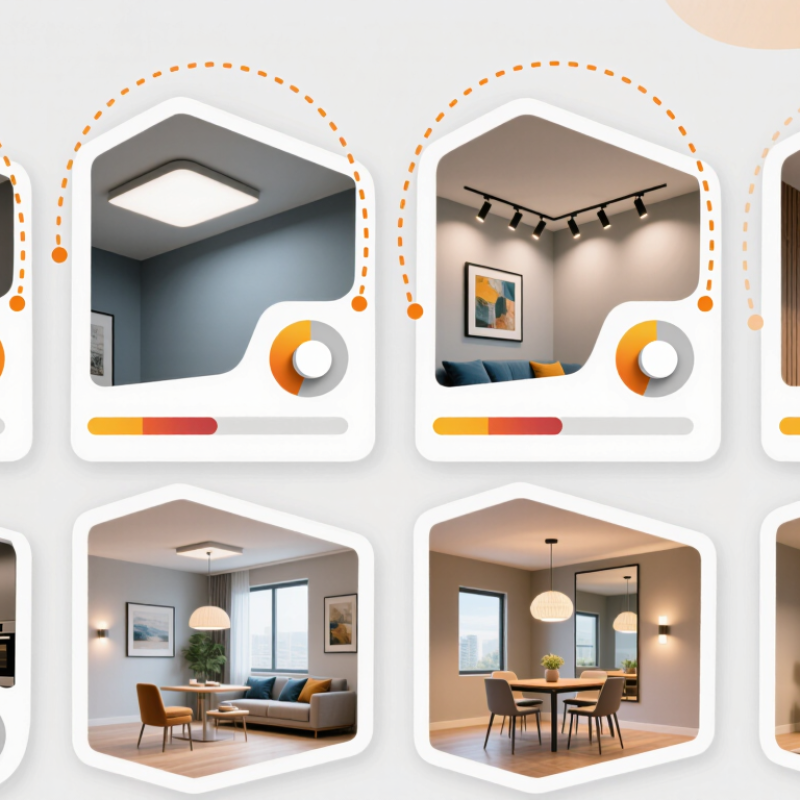
Assess the room before choosing a fixture. Watch where daylight enters at 8 a.m. and 5 p.m. A bright window may leave the hallway surprisingly dark. Use sheer curtains to soften glare without losing useful daylight. Place a mirror opposite the window, but check reflections from nearby screens. They can become irritating.
Layered lighting usually works better than one strong ceiling lamp. Combine a compact ceiling fixture, slim wall lights, and a floor lamp with a narrow base. Add under-cabinet lighting in the kitchen for safer chopping and clearer work surfaces. Use a small task lamp beside a reading chair. In a studio, vertical lighting can draw the eye upward and make the ceiling feel higher. Warm white bulbs often create comfort, while neutral light helps detailed tasks. Dimmers are valuable when one room serves several purposes.
Measure furniture before adding lights. A beautiful floor lamp can block a walkway by only a few centimeters. I once placed a wall light too close to a mirror, and its glare was difficult to ignore. That mistake reminded me to test brightness from seated and standing positions. Do not trust a showroom impression. Small rooms magnify shadows, heat, and visual clutter. Choose fixtures with simple shapes, hide loose cords, and keep switches reachable. Some plans still fail. Living habits change, and lighting should be adjusted with them.
Using natural light well can make a compact room feel wider, calmer, and more useful. In my experience, the biggest change often starts with clean windows. Remove heavy curtains, wash the glass, and choose sheer fabric for privacy. Keep window frames visually simple. Place a mirror opposite the brightest opening, but angle it slightly to avoid harsh glare. Pale walls, a light ceiling, and reflective flooring can spread daylight deeper into the room. These surfaces do not create light, but they help preserve it.
Keep tall furniture away from windows. Choose low shelves, narrow tables, and open storage near the brightest wall. Leave interior doors open when possible, allowing daylight to travel between rooms. A glass-panel door can brighten a darker passage.
If the room lacks a large window, consider a roof light, a sun tunnel, or a carefully positioned internal transom. These changes need professional assessment, especially in older homes. Safety matters.
Use light-colored rugs and uncluttered surfaces to reduce visual weight. Add adjustable artificial lighting for cloudy afternoons, because daylight is never predictable. I once relied too heavily on a mirror and created an uncomfortable reflection near a desk. It looked clever, but it was not practical. Test each idea at different times of day. A small sample area may reveal problems that photographs miss. Natural light should support daily habits, not merely make a room look larger.
Small homes need light that changes with the task, not simply more fixtures. In a 45-square-meter apartment, I start with ambient light: a ceiling fixture or diffused wall glow. I choose warm-white lamps around 2700–3000K for living areas. Dimmers matter more than oversized fittings. They let one room shift from morning cleaning to evening rest. Keep the central light soft. Harsh overhead brightness makes low ceilings feel lower.
Task lighting should land exactly where work happens. Add an adjustable lamp beside a reading chair, under-cabinet strips above a kitchen counter, and focused mirror lights in the bathroom. Place light slightly in front of your face, not directly above it. This reduces shadows while shaving, cooking, or applying makeup. I check the counter at night with the main light off. If my hands cast strong shadows, the task layer needs adjustment. Small error, big annoyance.
Accent lighting gives compact rooms depth. Aim a narrow beam at artwork, a textured wall, or a tall plant. A light behind an open shelf can separate objects from a dark corner. Keep accent output lower than task lighting, or the room becomes visually noisy. Use consistent color temperatures where layers overlap. I sometimes over-light the first attempt, especially near reflective tiles. Stepping back after sunset reveals the problem better than measuring alone. Leave cables accessible for changes; small homes evolve, and fixed plans often age badly.
Layer ambient, task, and accent lighting to make compact rooms feel brighter, more functional, and visually spacious.
The chart uses typical residential target illuminance levels in lux. Ambient lighting generally uses lower, even illumination, while task areas such as kitchen counters, mirrors, and reading corners require brighter focused light. Accent lighting adds visual depth and should be adjusted to complement the surrounding ambient light.
Small homes need lighting that works without stealing walking space. In my own compact apartment, ceiling height mattered more than floor area. I replaced a bulky standing lamp with a slim, wall-mounted reading light beside the sofa. It freed one corner immediately. Flush-mount ceiling fixtures suit bedrooms and hallways, while recessed lights can brighten kitchens without lowering the visual ceiling. Choose fixtures with diffused shades to reduce glare on white walls. A warm color temperature, around 2700K to 3000K, usually feels comfortable in living areas.
In the kitchen, install under-cabinet lighting to illuminate chopping surfaces. Pendants can work above a narrow island, but keep them high enough to protect sightlines. A small bathroom benefits from a mirrored cabinet with integrated lighting. It combines storage and task light in one footprint. For entryways, try a shallow wall sconce or a ceiling fixture with a motion sensor. In a child’s room, use a compact adjustable lamp with a stable base, keeping cords secured and away from pathways. Even a dining nook can use a swing-arm wall lamp instead of a table lamp.
Tips: Measure before buying, including door swings and furniture depth. Layer ambient, task, and accent lighting rather than relying on one bright fixture. Check the bulb’s color rendering, especially near mirrors and kitchen counters. I once chose a beautiful narrow fixture that cast harsh shadows; it looked efficient, but felt tiring at night. That mistake reminded me that compact design is not enough. Light must also be comfortable, serviceable, and easy to clean. Leave access to switches and replaceable bulbs.
| No. | Room | Space-Saving Fixture | Typical Size | Recommended Output | Color Temperature | Best Installation Method | Main Space-Saving Benefit | Practical Selection Tip |
|---|---|---|---|---|---|---|---|---|
| 1 | Living Room | Slim Flush-Mount Ceiling Light | Diameter: 30–45 cm Depth: 4–8 cm |
1,500–3,000 lumens | 2700–3000 K | Directly against the ceiling | Provides broad ambient light without reducing headroom or occupying floor space. | Choose a dimmable model to shift from bright daily lighting to a softer evening level. |
| 2 | Kitchen | Under-Cabinet Linear Light | Length: 30–90 cm Depth: 2–4 cm |
300–800 lumens per metre | 3000–4000 K | Mounted beneath upper cabinets | Lights work surfaces directly while keeping the ceiling and countertops visually uncluttered. | Select a high color-rendering option, ideally with a CRI of 80 or higher, for clearer food preparation. |
| 3 | Dining Area | Compact Pendant with Adjustable Cord | Shade diameter: 20–35 cm | 800–1,500 lumens | 2700–3000 K | Ceiling-mounted above the table | Creates a focused visual zone without requiring a large chandelier or side table. | Hang the bottom of the fixture approximately 75–90 cm above the tabletop to preserve sightlines. |
| 4 | Bedroom | Wall-Mounted Swing-Arm Reading Light | Projection: 20–40 cm Backplate: 8–15 cm |
300–600 lumens | 2700–3000 K | Fixed to the wall beside the bed | Replaces bedside lamps and frees valuable space on compact nightstands. | Use a movable arm or adjustable head so the beam can be directed toward a book without shining across the room. |
| 5 | Bathroom | Slim Vertical Vanity Sconces | Height: 40–70 cm Depth: 5–10 cm |
400–800 lumens per side | 3000–4000 K | Mounted vertically beside the mirror | Uses narrow wall areas and distributes light more evenly across the face than a single overhead fixture. | Use fixtures rated for the bathroom location and avoid placing unprotected fittings where they may be splashed. |
| 6 | Hallway | Recessed Downlights | Trim diameter: 7–12 cm Low-profile housing |
500–900 lumens each | 2700–3000 K | Installed flush within the ceiling | Maintains clear wall and ceiling lines in narrow circulation spaces. | Space several smaller lights evenly instead of relying on one overly bright source at the center. |
| 7 | Home Office | Clamp-On Adjustable Desk Lamp | Clamp depth: 4–7 cm Arm reach: 35–60 cm |
400–800 lumens | 3500–4000 K | Clamped to the rear or side of the desk | Delivers task lighting without consuming the limited work surface needed for equipment and documents. | Position the light opposite the hand you write with to reduce shadows; use flicker-free dimming when available. |
| 8 | Entryway | Picture Light or Short Wall Light | Length: 30–60 cm Projection: 8–15 cm |
300–700 lumens | 2700–3000 K | Mounted above artwork, a mirror, or a slim console | Adds welcoming accent lighting while leaving the floor clear for coats, shoes, and movement. | Aim the beam at the wall or artwork to create depth without making a narrow entry feel crowded. |
| 9 | Stairway | Recessed Step or Wall Marker Lights | Diameter: 5–10 cm Low-profile face |
50–150 lumens each | 2700–3000 K | Installed in the wall beside selected steps | Improves visibility with minimal projection into the walking path. | Use a consistent spacing pattern and shielded optics to reduce glare while maintaining comfortable navigation. |
| 10 | Small Bedroom or Studio | Ceiling Fan with Integrated Light | Fan diameter: 90–120 cm Low-profile canopy |
1,000–2,000 lumens | 2700–3500 K | Ceiling-mounted in the room center | Combines two ceiling functions in one footprint and avoids using a separate floor fan or large light fixture. | Confirm that the ceiling height, electrical box, and fan clearance are suitable before installation. |
| Typical lumen ranges are general planning values; the appropriate output depends on room size, ceiling height, surface colors, and the amount of natural light. | ||||||||
Small rooms need layered lighting, not simply brighter bulbs. A flush ceiling fixture saves headroom and spreads general light. Wall sconces free bedside tables and make narrow walls feel intentional. A slim pendant can define a dining corner without blocking movement. Choose a small shade with a warm, comfortable glow.
It matters.
Place under-cabinet lights beneath kitchen shelves for safer food preparation. Add toe-kick lighting near floor level to guide nighttime movement.
A mirror opposite a window can reflect daylight across a darker wall. Sheer curtains preserve natural light while reducing harsh afternoon glare. Pale surfaces also help, although fingerprints become more visible.
Use a compact table lamp beside a sofa for reading. Install dimmers so one room can serve several moods. Separate lighting zones with independent switches, especially in studio apartments.
I once used a single overhead fixture in a small bedroom, and the corners looked dull. That mistake taught me to test lights from sitting and standing positions. Check shadows on worktops, not just the brightness on the floor.
Select fixtures with suitable insulation and ask a qualified electrician about wiring. Avoid placing hot lamps against curtains or tightly enclosed shades. A beautiful fixture is still inconvenient if it creates glare, heat, or awkward cleaning.
Clean the windows and remove heavy curtains. Use sheer fabric for privacy. Pale walls and light flooring help daylight travel farther. They do not create light. They only preserve it.
Place it opposite the brightest window. Angle it slightly to reduce glare. Check the reflection near desks and seating areas. I once created an uncomfortable reflection beside a desk.
Keep tall furniture away from windows. Choose low shelves, narrow tables, and open storage. Leave the brightest wall visually open. Every inch matters.
Use wall-mounted reading lights beside sofas or beds. Flush ceiling fixtures suit bedrooms and hallways. Recessed lighting can brighten kitchens without reducing ceiling height. Measure furniture depth first.
Install under-cabinet lights above food preparation areas. They reduce shadows on chopping surfaces. Add separate lighting zones when possible. Bright floors alone are not enough.
A mirrored cabinet with integrated lighting saves wall space. A shallow wall sconce suits a narrow entryway. Motion-sensitive ceiling lighting can guide late arrivals. Keep switches easy to reach.
Combine ambient, task, and accent lighting. Use dimmers for different activities. Independent switches help separate kitchen, seating, and sleeping zones. One bright fixture can leave corners dull.
Choose diffused shades and a warm color temperature, around 2700K to 3000K. Secure cords away from walking paths. Keep hot lamps away from curtains. Ask a qualified electrician about wiring. Test the room at different times. Photos can hide annoying shadows.
Designing effective lighting in a small home begins with understanding each room’s natural light, layout, daily activities, and visual limitations. The Best Lighting Ideas For Small Homes focus on making spaces feel brighter, taller, and more open without adding clutter. By observing where sunlight enters and how furniture is arranged, homeowners can choose lighting that supports comfort while maximizing every available corner.
A successful plan combines ambient lighting for overall brightness, task lighting for focused activities, and accent lighting to add depth and character. Reflective surfaces, light-colored shades, wall-mounted fixtures, slim ceiling lights, and adjustable lamps can help compact rooms appear more spacious. The guide also presents ten practical ideas for living areas, kitchens, bedrooms, bathrooms, hallways, and workspaces, emphasizing flexible fixtures, efficient placement, and simple controls. With thoughtful layering and space-saving choices, even the smallest home can feel welcoming, functional, and visually balanced.

Boray Light