In 2026, a room can have beautiful finishes and still feel uncomfortable under the wrong light. Common Lighting Mistakes To Avoid include choosing bulbs by wattage alone, relying on one ceiling fixture, and ignoring how color temperature changes across a space. The result may be a kitchen counter with harsh glare, a hallway with dark patches, or a bedroom that feels too bright at night. Small choices matter.
The U.S. Department of Energy reports that LED bulbs use at least 75% less energy than incandescent lighting and can last up to 25 times longer. Efficiency helps, but it does not guarantee good lighting. A poorly placed LED can still shine directly into someone’s eyes. Lighting designer Randall Whitehead captures the role of light in a room with the often-cited line, “Lighting is the jewelry of the room.” A useful reminder. Yet even decorative fixtures need to serve the people using the space.
This guide looks at practical decisions: layering ambient, task, and accent lighting; selecting suitable brightness and color temperature; and checking glare before committing to a fixture. It also considers dimmers, daylight, and the way finishes reflect light. A sample bulb may look different at home than it does in a showroom. That detail is easy to miss. Good lighting is not just about making a room brighter; it is about making everyday tasks easier and the space more comfortable.
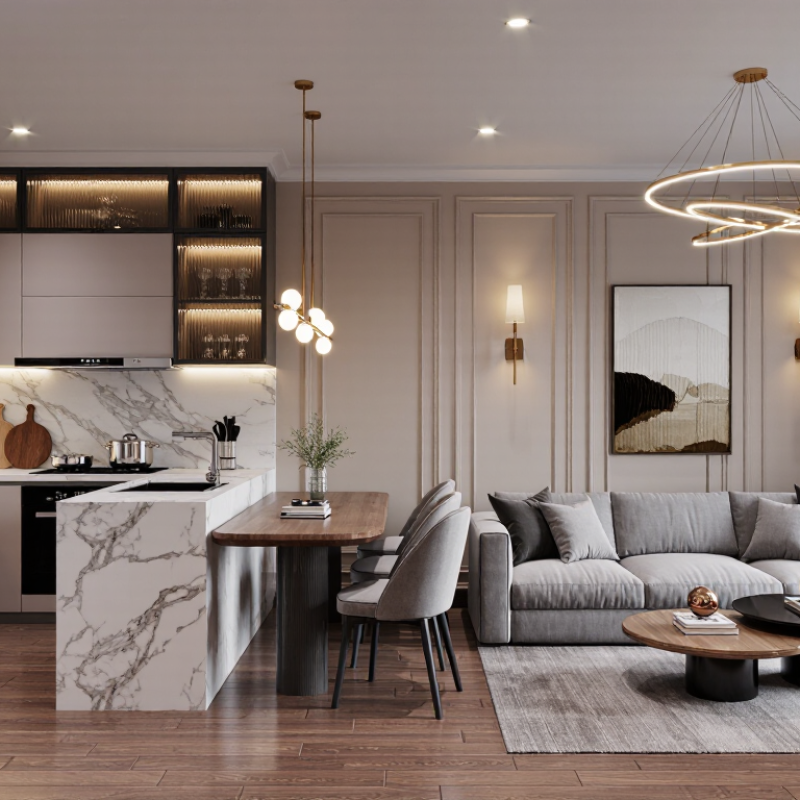
Before selecting a fixture, note what each room is used for and when. A kitchen needs clear light over counters; a bedroom may need softer light for reading and winding down. The U.S. Energy Information Administration’s 2020 Residential Energy Consumption Survey estimates that lighting accounts for about 4% of household energy use. That share is modest, but poor placement can still make daily tasks uncomfortable.
Check the existing light at different times: stand by the sink, desk, or sofa and notice where shadows fall. Daylight changes the picture. So does a pale wall.
Then match the light to the activity, not just the room name. The U.S. Department of Energy says LED bulbs use at least 75% less energy and last up to 25 times longer than incandescent bulbs. Efficiency matters, but it cannot fix glare or a dark work surface.
A common oversight is replacing a ceiling bulb without checking whether the room needs a separate reading or task light. I have to remind myself to assess the actual spot, not judge from the doorway.
A small test helps: switch on one lamp, sit where you usually read, and see whether the page is evenly lit. Recheck after dark. Daylight can fool you.
A balanced lighting plan uses ambient, task, and accent light for different jobs. Ambient lighting fills the room, but one ceiling fixture can leave corners dim and faces shadowed. Add task lighting where work happens: a shaded lamp beside a reading chair, or focused light over a kitchen counter. Aim beams at the surface, not directly into your eyes.
Accent lighting adds depth to shelves, artwork, or textured walls. Keep it subtle; too many bright focal points can make a room feel restless. Choose bulbs with similar color temperatures in adjoining areas, and use dimmers where possible. Test the layout after dark. A plan that looks balanced on paper may still feel flat in the room.
Tips: Turn on each layer separately, then together. Check for glare on screens and dark patches near seating. A small floor lamp can fix an awkward corner. Don’t buy every fixture at once; live with the setup briefly and adjust what feels off. I’d still revisit the plan after moving furniture, because light changes with the layout.
| Room or Area | Ambient Lighting | Task Lighting | Accent Lighting | Common Mistake | Balanced Layout |
|---|---|---|---|---|---|
| Living room | Aim for about 100–200 lux for general use, using ceiling or indirect lighting. | Provide around 300–500 lux at reading seats with adjustable floor or table lamps. | Use focused light on artwork, shelves, or architectural details; keep it subtle against the ambient layer. | Relying on one bright ceiling fixture, which can create glare and flat-looking shadows. | Combine dimmable general light with localized reading lights and a few carefully aimed accent sources. |
| Kitchen | Use roughly 150–300 lux across the room for comfortable movement and everyday activities. | Target about 300–500 lux on worktops, with light positioned to reduce shadows from the user. | Highlight open shelving or a dining area without directing glare into the eyes. | Placing all light behind the person working at the counter, so their body blocks the work surface. | Layer ceiling lighting with under-cabinet task lighting; select suitable enclosed fittings near cooking areas. |
| Bedroom | Provide about 100–200 lux for general use, preferably with dimming for evening comfort. | Use a focused reading light that delivers roughly 300–500 lux at the page without lighting the whole room. | Softly illuminate a headboard, artwork, or a feature wall if desired. | Using a single overhead light for reading and relaxing, often causing harsh brightness at night. | Separate general lighting from bedside controls and choose shades that shield the light source from direct view. |
| Bathroom | Around 100–200 lux can provide comfortable general illumination. | Provide approximately 300–500 lux at the mirror, with light from both sides or a well-diffused source near the face. | Use limited accent lighting only where it will not compromise visibility or safety. | Depending on a ceiling light alone, which can cast shadows across the face at the mirror. | Layer general lighting with even mirror lighting, and use fixtures rated for the relevant damp or wet location. |
| Home office | Aim for roughly 200–300 lux in the surrounding space to avoid a very bright screen against a dark room. | Provide about 300–500 lux on the work surface, adjusting the lamp to limit screen reflections. | Use restrained background or shelf lighting to add depth without distracting from the task. | Positioning a desk lamp where it reflects off the monitor or creates strong hand shadows. | Balance room lighting with an adjustable desk light, and test the setup from the seated position. |
Planning note: Lux values are practical starting ranges, not fixed requirements. Actual needs vary with room size, surface finishes, daylight, visual tasks, and user preference. Use dimmers or separate controls to adjust each lighting layer.
A room can feel dim even when its lamp uses plenty of watts. Choose by lumens, which describe light output, then consider the room’s size, wall color, and task. A kitchen counter needs clear, even light; a bedside lamp should not glare into your eyes. There is no single brightness that suits every room. I still find it easy to overestimate how much light a dark-painted room needs.
Color temperature changes the room’s feel. Around 2700–3000 K often suits warm, relaxed spaces, while a cooler setting can help keep work surfaces visually crisp. Treat these ranges as starting points, not rules. For color accuracy, check the color rendering index (CRI), but do not stop there. The Illuminating Engineering Society’s TM-30 method assesses 99 color samples and reports fidelity (Rf) and gamut (Rg), giving a fuller picture than CRI alone. A high CRI can still leave some colors looking slightly off. Compare product data under the same conditions, and test a bulb beside familiar objects, such as a red tomato or a blue shirt, before fitting several. The U.S. Department of Energy’s 2015 Lighting Market Characterization estimated that lighting used about 6% of U.S. electricity, so efficient choices matter too. Don’t chase maximum brightness.
Glare often comes from a fixture aimed at the wrong surface, not simply from excessive brightness. At a desk, place the task light opposite your writing hand to reduce shadows across the page. Keep bare bulbs outside your direct line of sight, especially near screens and polished countertops. A diffuser or adjustable shade can soften harsh light without making the room feel dim. Small change, big relief.
Poor fixture placement can create dark patches where you need clear visibility. A ceiling light directly above a person may cast shadows onto a mirror, sink, or work surface. Add side lighting near mirrors, and position kitchen task lights toward the front of counters so cabinets do not block the beam. In hallways, check that the light reaches the floor evenly, including corners and stair edges. Even a careful plan can miss how a tall cabinet changes the light.
Test the layout after dark, when daylight no longer hides weak spots. Sit, stand, and move through the room; notice reflections on screens and shadows under cabinets. If a light feels uncomfortable, adjust its angle or location before adding another fixture. A dimmer can help, but it cannot fix a beam pointed straight at your eyes. And sometimes, the first placement is simply wrong. That is useful information, not a failure.
How to Avoid Common Lighting Mistakes in 2026?
Test lighting controls during normal use, not only at installation. Check an occupied desk in the morning, at midday, and near sunset. Watch how daylight affects screen glare and whether dimmed lights still illuminate paper clearly. Then test the occupancy sensor from a seated position; a sensor may miss someone working quietly. Small changes matter. A Lawrence Berkeley National Laboratory meta-analysis of commercial-building studies found occupancy sensors saved an average of 24% of lighting energy. Results varied by building and setup, so treat that figure as a guide, not a promise.
Adjust one setting at a time. Set a comfortable light level first, then tune shutoff delays and daylight dimming. A delay that is too short can leave people in the dark; one that is too long wastes energy. Check shared spaces at different times, too. The first adjustment is rarely perfect, and a quick test with occupants can reveal problems a commissioning checklist misses.
Tips: Mark a few desk locations and test each control there. Sit still for several minutes to check sensor coverage. On a bright day, lower electric light gradually and look for reflections on screens. Ask occupants what feels tiring, then retest after changes. Keep brief notes on settings and conditions.
Compare typical task illuminance guide values to help test controls and adjust lighting for comfort and efficiency.
These approximate lux values are starting points; suitable levels vary with the task, room, age, and applicable guidance. Measure light at the work surface, then adjust dimmers or task lighting to avoid glare and unnecessary brightness.
Match the light to the task. Use clear light over kitchen counters and softer light beside a bedroom reading chair.
Daylight shifts throughout the day and can hide dim spots. Check the sink, desk, or sofa after dark, too.
Place the desk lamp opposite your writing hand. This keeps your hand from casting a shadow across the page.
Keep bare bulbs out of your direct view. Try an adjustable shade or diffuser, and check reflections on screens.
Aim them toward the front of counters. Cabinets can block light aimed too far back.
LEDs use at least 75% less energy and can last up to 25 times longer than incandescent bulbs. They cannot fix glare or a poorly lit work surface.
Sit at the desk for several minutes and see whether the sensor detects you. Quiet work can be missed.
Adjust the angle or location before adding another fixture. My first placement is not always right. Retest after dark.
Avoiding Common Lighting Mistakes To Avoid in 2026 starts with understanding how each room is used and what light it already receives from windows and existing fixtures. A thoughtful plan combines ambient lighting for overall visibility, task lighting for activities such as reading or cooking, and accent lighting to highlight selected details. Choose brightness levels, color temperatures, and color rendering that suit the room’s purpose and support comfortable, clear vision.
Fixture placement matters just as much as fixture choice. Position lights to reduce glare, harsh shadows, and uneven brightness, especially around work surfaces, seating, and screens. Once installed, test switches, dimmers, and other controls at different times of day. Make small adjustments until the lighting feels comfortable and functional while avoiding unnecessary energy use. A balanced, adaptable setup can make a room more practical and welcoming.
Boray Light